Big Changes I Made To My Portfolio Before The End Of The Year

Today I am going to write about one of the most important and strategic changes I have ever made to my portfolio.
Exxon Mobil is now the largest single equity position in my entire portfolio, accounting for more than 8 percent of the total. This shows how much confidence I have in the company and in its future.
And yes, I am excited. Not only because it is a large investment, but because I firmly believe this is one of the most misunderstood and undervalued stocks in the global market right now.
THE CHANGES
The new year is approaching, so I decided to make some adjustments. Last Friday, I proceeded to close two positions in my portfolio.
The first position I closed was JP Morgan, which had delivered a return of +166 percent over 2.5 years.
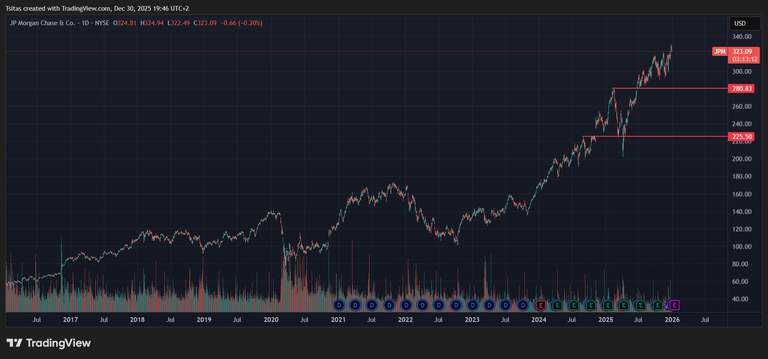
Why did I close it? Because (a) the position was below 2 percent of the portfolio and (b) it had become expensive, with a price to book ratio of 2.5.
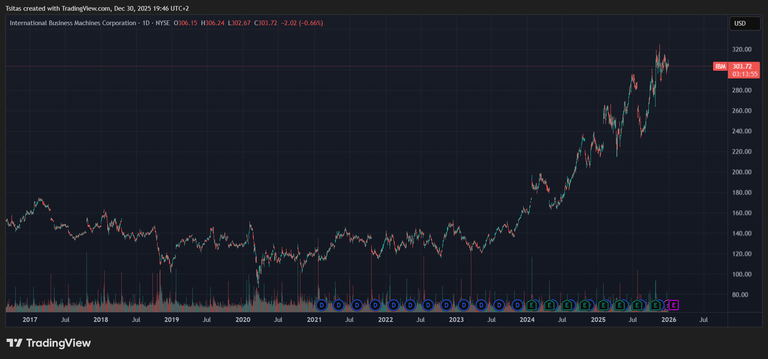
Now, the second position was going to be closed anyway. I am referring to IBM. It was the “bet of 2025”, an experimental allocation that no longer made sense. Even so, it performed very well, with a return reaching +38 percent in one year.
WHY EXXON MOBIL?

As I mentioned at the beginning, I chose to decisively strengthen my position in Exxon Mobil. You may now be wondering why I did this. There are five main reasons:
Resilience at low oil prices: Exxon Mobil has one of the lowest production costs in the industry, with extraction costs of just 30 dollars per barrel. This means it can remain profitable even when global oil prices fall below 60 dollars, which is a major advantage over competitors that struggle to survive at such levels.
Market share growth: When other oil companies are forced to cut production due to costs or liquidity constraints, Exxon Mobil not only holds up but also gains additional market share. Its stability makes it a leading force in the sector during periods of crisis.
2030 plan: Exxon Mobil’s management has presented a comprehensive and realistic plan through 2030, forecasting a doubling of net profits, free cash flow, and return on invested capital. All of this is based on conservative assumptions for oil prices. This reflects strategy, vision, and effective management.
Technological leadership: Exxon Mobil is no longer just a traditional energy company. It has invested heavily in innovation, achieving a 20 percent increase in extraction efficiency. The acquisition of Pioneer in 2023 further strengthened its technological edge, creating synergies that lead to faster, cheaper, and more efficient production.
Reduction in operating costs: The company has already launched a cost reduction plan targeting savings of more than 20 billion dollars by 2030. This not only boosts profit margins but also makes the company more resilient to future crises or drops in demand.
And most importantly, all of the above are based on a conservative scenario in which oil prices remain around 65 dollars per barrel, meaning today’s relatively low levels. If prices move higher, profit margins increase even more.
Target based on various scenarios I have run:
Base case: Target price at 276 dollars, representing a +130 percent return
Bull case: 320 dollars with a +169 percent return
Bear case: 200 dollars with a +68 percent return
Happy New Year!

https://www.reddit.com/r/wikifolio/comments/1q3iw9h/big_changes_i_made_to_my_portfolio_before_the_end/
This post has been shared on Reddit by @blkchn through the HivePosh initiative.
Could have been a clever move, considering Trump and Venezuela