Book Review: Frankenstein, the modern Prometheus by Mary Shelley (ENG-SPA)



I just finished reading "Frankenstein, the Modern Prometheus" by Mary Shelley. A classic, considered the first science fiction novel, and as a lover of this genre, it was a long-standing task that I've now completed. By the way, I used to think of it as Gothic and horror. How wrong I was!
I wonder how many people have actually read it before watching the film adaptations. Based on my own experience, I’d say very few. Forgive me if you're not one of them. I admire you for being a true lover of literature.
Perhaps, like me, you grew up with the image of a pale, square-faced, flattened-headed figure with slicked-back hair, vacant eyes, and bolts in his neck—immortalized by Boris Karloff and humorously parodied by Fred Gwynne as Herman Munster in the 1960s TV series. Now, after learning about the original 1818 novel, that iconic image has been shattered, not because of the vivid description—absent in the work regarding the supposed monster—but because of the masterful portrayal of the creature that shows its evolution beyond just its physical appearance.

Source: Screenshot of the illustration by Miguel Rodriguez Cerno inside the book
Consider how flawed the stereotype is: from a foolish and evil creature, I moved to a feeling of pity for a being devoid of love and purpose, forced to learn on its own through accelerated imitation behind the scenes, and who in the process read Plutarch, Milton, and Goethe in search of its place in a world that despised it for its ugliness.
Undoubtedly, a version radically different from the early cinematic tropes. You know, the mad scientist, obsessed with reanimating a collection of corpses.
Yes, there is something of this in the background, suggested rather than explicit, woven together splendidly in a nested and fluid epistolary prose, very typical of the late 18th and early 19th centuries, which subtly unfolds to the imagination. Besides addressing the anxieties of the author's time, she delved into the boundaries of humanity's thirst for knowledge, offering a secular warning about its dangers.
I was struck by the fact that she published it anonymously at only eighteen, and that a (sweetened) reissue appeared under her name in 1831. Therefore, be cautious about which version you read. I can't and shouldn't offer an opinion on that version before a first reading, obviously not. However, I can tell you that, as far as I've researched, it was the most widely read version of its time: improved in style, but tame in essence.

Source: Screenshot of the illustration by Miguel Rodriguez Cerno inside the book
Netflix recently released Guillermo del Toro's adaptation with great fanfare. My daughter watched it and liked it. Well, the Mexican filmmaker is one of the most celebrated of our time, and he describes himself as a Frankenstein fan since he was eleven. So, if you can, watch it. However, I recommend reading the novel first. You have no excuse: it's in the public domain, more than two hundred years after its first edition.
As usual, I investigated to give credit to the translator; however, this time I didn't find much information. Some say that José C. Vales did the best Spanish translation, but I found the one by María Engracia Pujals and the illustrations by Miguel Rodríguez Cerno. After comparing an excerpt with the original English, I recommend the latter, for its faithfulness to the original, as well as for the didactic and interesting appendix and its more than one hundred endnotes. Nevertheless, I must add that in my glance at José C. Vales's exquisite and clear prose, I found it very pleasant and enticing. This will certainly be my second reading of Frankenstein.
For those who read other languages, I suspect that, being a classic of world literature, there will already be a version in your respective languages.
I trust you will read it and enjoy it as much as I did.
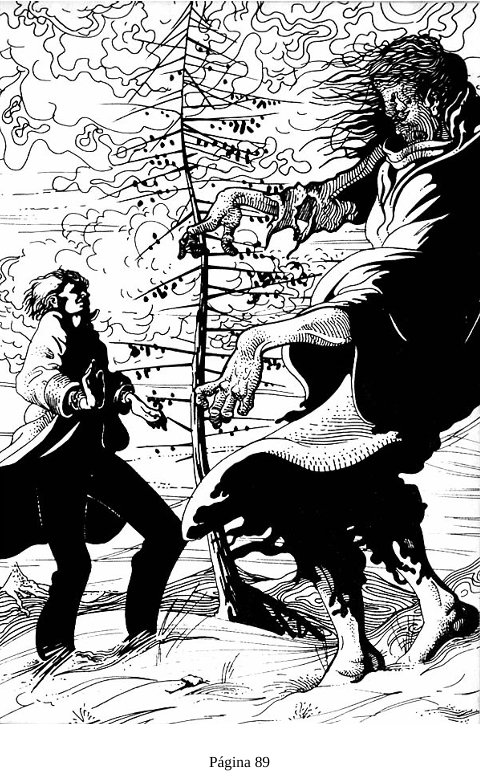
Source: Screenshot of the illustration by Miguel Rodriguez Cerno inside the book

The book's review by @janaveda, written in Spanish and translated into English using https://translate.google.com
The thumbnail was made from a screenshot of the book cover
Thanks for reading to me. I hope this review is to your liking. I would greatly appreciate reading your comments on this matter to benefit from your perspective and criticism.
Tired...! Are you no longer satisfied with traditional social media?
Then I invite you to get to know Hive by clicking here.
Join our global community, where uncensored freedom is our north.


Acabo de leer «Frankenstein, el moderno Prometeo» de Mary Shelley. Un clásico, que es considerado la primera novela de la ciencia ficción, y como amante de este género era una tarea pendiente que he zanjado. Por cierto, antes la tenía como gótica y de terror. ¡Qué errado estaba!
Entonces me pregunto: ¿cuántos la habrán leído (antes de ver las versiones cinematográficas)? Supongo, con base en mi propia experiencia, muy pocos. Perdóname si no entras en este grupo. Te felicito por ser un verdadero amante de la literatura.
Quizás, como yo, habrás crecido con la imagen de la pálida cara cuadrada y cabeza aplanada con cabello lacio pegado, ojos perdidos y con tornillos en el cuello que inmortalizó Boris Karloff, y que parodió magistralmente Fred Gwynne como Herman Munster en la serie de los 60. Ahora, conocida la versión original de la novela (1818), la icónica imagen se ha resquebrajado. No por la vivida descripción (faltante en la obra sobre el presunto monstruo), sino por la magnífica semblanza de la criatura que retrata su evolución más allá de la apariencia física.
Fuente: Captura de la ilustración del Miguel Rodriguez Cerno en el interior del libro
Considera lo equivocado del estereotipo: de una criatura tonta y malvada, pasé al sentimiento de lástima de un ser desprovisto de amor y propósito, obligado a aprender por sí mismo por imitación acelerada tras bastidores, y que en el proceso leyó a Plutarco, Milton y Goethe en búsqueda de su lugar en un mundo que lo despreciaba por su fealdad.
Sin duda, una versión muy alejada de las primeras del séptimo arte. Ya sabéis, el científico loco, obsesionado por darle vida a un ensamble de cadáveres.
Sí, algo de esto hay en el trasfondo, sugerido y no explícito, hilvanado con esplendor en una prosa epistolar anidada y fluida, muy típica a finales del siglo 18 y 19, que se devela con sutileza a la imaginación. Además de plantear los temores propios de la época de la autora, se adentró en las fronteras del afán humano por el conocimiento, como una advertencia y sus peligros desde lo laico.
Me impresionó que la publicara de manera anónima con solo dieciocho años y una reedición (edulcorada) con su nombre en 1831. Así que, tened cuidado con cuál versión leas. No puedo ni debo opinar de primera lectura sobre esa versión, obvio, no. Empero, sí referirles que, hasta donde investigué, fue la más leída en su época: mejorada en estilo, pero amaestrada en esencia.
Fuente: Captura de la ilustración del Miguel Rodriguez Cerno en el interior del libro
Hace poco Netflix estrenó la adaptación de Guillermo del Toro con bombos y platillos. Mi hija la vio y le gustó. Bueno, el cineasta mexicano es uno de los más celebrados de nuestra época, y se autodefine como un fan de Frankenstein desde los once años. Así que, si podéis, véanla. Aunque, yo les recomiendo lean primero la novela. No tenéis excusas: es de dominio público, luego de más de doscientos años desde su primera edición.
Como acostumbro, indago para dar crédito al traductor; sin embargo, en esta ocasión no hallé mucho al respecto. Hay quienes dicen que la mejor traducción al español la hizo José C. Vales, mas yo encontré la de María Engracia Pujals y el ilustrador Miguel Rodríguez Cerno. Después de comparar un extracto con el original en inglés, recomiendo esta última, por el apego al original, como también por el didáctico e interesante apéndice y sus más de cien notas al final de la obra. No obstante, debo acotar, que en la exigua hojeada de la prosa exquisita y clara de José C Vales la hallé muy agradable y tentadora. De seguro, esta será mi segunda lectura de Frankenstein.
Para los de otros idiomas, sospecho que al ser un clásico de la literatura universal, ya habrá una versión en sus respectivas lenguas.
Confío en que la lean y la disfruten tanto como yo.
Fuente: Captura de la ilustración del Miguel Rodriguez Cerno en el interior del libro

Reseña del libro por @janaveda
La miniatura se creó a partir de la captura de la portada del libro
Gracias por leerme. Espero que esta reseña sea de su agrado. Me gustaría mucho leer sus comentarios al respecto para enriquecerme con sus críticas.
¡Cansado! ¿Ya no te satisfacen las redes sociales tradicionales?
Entonces, te invito a conocer Hive presionando aquí.
Únete a nuestra comunidad global, en donde la libertad sin censura en nuestro norte.