Television Review: Garaža (Otpisani, S1X02, 1974)

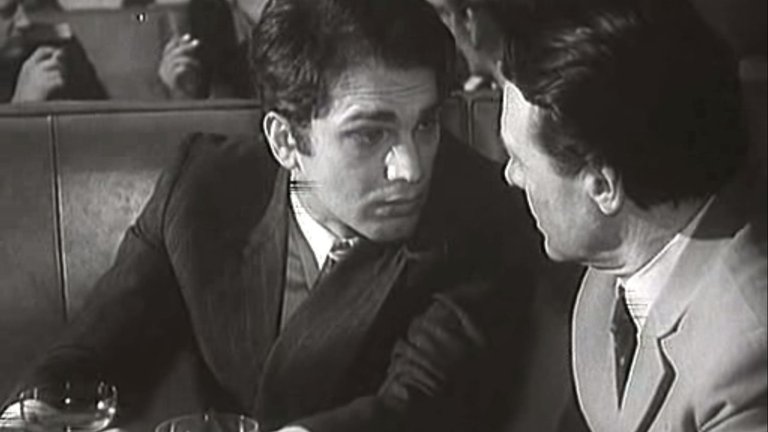
Garaža (S01E02)
Airdate: 29 December 1974
Written by: Dragan Marković & Siniša Pavić
Directed by: Aleksandar Đorđević
Running Time: 48 minutes
In the post-Communist era, it became a fashionable intellectual stance across the former Yugoslavia, particularly in Serbia, to dismiss the once-revered partisan series Otpisani as little more than state-sanctioned agitprop. While it is undeniable that the series enjoyed the full favour of regime and its creators took significant dramatic liberties, to claim it was entirely fabricated would be a profound error. The series’ enduring power stems precisely from its skilful grafting of compelling fiction onto a robust trunk of historical fact. The second episode, Garaža (“The Garage”), serves as a prime example of this synthesis. It constructs a tense, action-driven narrative around a seminal real event—the torching of a German motor pool in Belgrade—while weaving in authentic details of the brutal occupation, thereby creating a mythologised yet recognisably grounded chapter of resistance history.
The episode’s central narrative engine is the arson attack on a German military garage in central Belgrade on the night of 26 July 1941, which resulted in the destruction of 23 vehicles. This was not a fictional contrivance but the single largest act of sabotage in a series carried out by Communist Youth militants that turbulent summer. This event was the immediate precursor to the resistance’s most audacious operation: the jailbreak of Aleksandar Ranković, depicted in the first episode, Bolnica.
The plot mechanics are set in motion with the arrest of the comrades’ associate, Boban (Žarko Radić). In a chilling sequence, Boban is among five prisoners arbitrarily selected by Gestapo Major Frank (Nikola Jovanović) for execution. The subsequent public hanging of the bodies on Terazije, Belgrade’s main square, is presented not merely as a plot point but as a stark representation of German reprisal policy. This directly references the infamous hanging of five prisoners on Terazije on 16 August 1941, an act designed to terrorise the populace. Here, the script, whilst altering the chronology, faithfully captures the method and psychological impact of Nazi occupation terror.
The episode’s core suspense derives from the practical challenges of the sabotage mission. The reconnaissance by Tihi and Zriki from a bombed-out building establishes the tactical problem: breaching a heavily guarded compound. The solution introduces one of the series’ more morally ambiguous subplots. Tihi reconnects with his former neighbour, Ljilja, now ‘Lili’ (Radmila Teodorović), a dancer entangled with Major Frank. Using his youthful charm and the pretence of black-market dealings, Tihi manipulates her to obtain a garage pass. The transaction is sealed with a reluctant sexual liaison, a moment of profound discomfort for Tihi, who has a girlfriend. This narrative choice—depicting a resistance hero effectively prostituting himself—is remarkably gritty. It adds a layer of cynical realism, challenging the pristine, ideologically pure partisan archetype. Its inclusion, handled with a notably brief and discreet scene, likely allowed it to pass state censors and avoid controversies, perhaps because it ultimately reinforces sacrifice for the cause, however personally degrading.
Parallel to this personal drama runs a classic Otpisani action set-piece. The accidental death of two resistance bomb-makers—a nod to real incidents involving Spanish Civil War veterans in August 1941—creates a shortage of explosives. Prle and Zriki remedy this with a daring heist. Donning stolen German uniforms, they ambush an officer, commandeer his vehicle, and storm a warehouse to seize the necessary materials. This sequence, pure pulp adventure, serves as the series’ stock-in-trade: demonstrating the ingenuity and boldness of the resistance whilst providing thrilling entertainment.
The sabotage itself is executed with procedural precision. Tihi infiltrates the garage, neutralises a guard, and cuts the wire. Zriki and Paja then ingress to plant the explosives. The ensuing chaos, however, is where director Aleksandar Đorđević fully embraces cinematic spectacle over historical fidelity. A tip-off to the Special Police, led by the Nikola and Krsta, triggers a prolonged and pyrotechnic firefight. In reality, the actual garage attack of July 1941 was a stealth operation concluded without a major confrontation. The episode’s extended shootout, replete with submachine gun bursts and grenade explosions, is a concession to audience demand for action, transforming a successful sabotage into a grand battle. The climax is carnage: Major Frank is killed, numerous police and German soldiers fall, and two members of the supporting Dorćol resistance cell are slain. Prle and Mile’s escape through the sewers provides a final, iconic image of survival against the odds.
Garaža thus operates on two distinct levels. Its script is meticulously researched, referencing a tapestry of real events: the garage arson, the Terazije hangings, the accidents in bomb-making workshops. Yet, it freely reorders this chronology and amplifies the drama for maximum impact. Đorđević’s direction emphasises this duality. The reconnaissance and infiltration scenes carry a tense, almost documentary realism, while the climax explodes into a fantastical, Hollywood-style battle.
This layering extends to minor details that reveal the production’s constraints and era. Military history enthusiasts will instantly spot the M8 Greyhound armoured car, a piece of American equipment supplied to Yugoslavia after the 1948 Tito-Stalin split, awkwardly standing in for a German vehicle. A more culturally jarring anachronism occurs in the nightclub scene, where dancers perform to Khachaturian’s Sabre Dance—a composition premiered in the Soviet Union in 1942, making its presence in a 1941 Belgrade club under Nazi occupation an impossibility. This scene was wisely cut from later remastered editions.
Ultimately, Garaža is a compelling artefact of its time. It is neither pure documentary nor mere propaganda. It is a mythopoeic work that uses historical fact as a foundation upon which to construct a heroic narrative. The episode acknowledges the brutality of occupation, the pragmatic, sometimes morally compromised actions of the resistance, and the high cost of war. Yet, it concludes with the triumphant explosion—a symbol of effective defiance. It assures its contemporary audience that their historical struggle was both noble and cinematically spectacular, fulfilling its dual role as education and entertainment. To dismiss it as only propaganda is to overlook its sophisticated, and enduring, craftsmanship as a piece of historical fiction that successfully blurred the line between the lived past and the needed myth.
RATING: 6/10 (++)
Blog in Croatian https://draxblog.com
Blog in English https://draxreview.wordpress.com/
InLeo blog https://inleo.io/@drax.leo
LeoDex: https://leodex.io/?ref=drax
InLeo: https://inleo.io/signup?referral=drax.leo
Hiveonboard: https://hiveonboard.com?ref=drax
Rising Star game: https://www.risingstargame.com?referrer=drax
1Inch: https://1inch.exchange/#/r/0x83823d8CCB74F828148258BB4457642124b1328e
BTC donations: 1EWxiMiP6iiG9rger3NuUSd6HByaxQWafG
ETH donations: 0xB305F144323b99e6f8b1d66f5D7DE78B498C32A7
BCH donations: qpvxw0jax79lhmvlgcldkzpqanf03r9cjv8y6gtmk9