"Hard Times" by Charles Dickens || "Tiempos difíciles" por Charles Dickens (Eng/Esp)

Hello, fellow book lovers, greetings from this corner of the world.
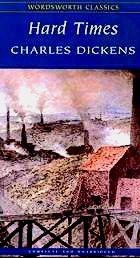 Digital library
And I'll get straight to one of the giants of World Literature, Charles Dickens, and his most socially studied novel.
I'll tell you about it from my experience, as if I had lived in Coketown. Here goes, friends.
If I had to summarize Hard Times, I'd tell you it's the story of what we lose when we only believe in numbers, in smoking factories, and in the cold idea of progress. I read it and feel Dickens is speaking directly to our hearts, showing us a world that decides feelings and imagination are useless luxuries.
It all starts with Thomas Gradgrind, a man for whom the world is measured only in facts. In his school, and in his own home, he forbids any hint of fantasy. His children, Louisa and Tom, grow up in a prison of rationality, without stories, without play, without warmth. Watching Louisa, especially, is heartbreaking. She is a young woman of deep intelligence, but completely anesthetized, who cannot name what she feels because she was never taught that feelings existed.
Opposite this family is the other pole of power: Josiah Bounderby, the factory and bank owner. He constantly boasts of being a self-made man from the most absolute poverty, despising his workers for lacking his supposed willpower. His arrogance is as great as his hypocrisy. And there, in the workshop, is Stephen Blackpool, a good and honest man trapped in an impossible life—a marriage destroyed by alcoholism and a labor system that sees him as a mere disposable cog.
Dickens paints Coketown with gray strokes. It's a place where everything smells of smoke, where the buildings are all the same, and where life is reduced to working, eating, and sleeping in an endless cycle. It's the perfect image of dehumanizing industrial capitalism, where people are resources and the chimneys are the temples.
The tragedy unfolds when Louisa, to help her brother Tom, agrees to marry the repulsive Bounderby. It's a calculated sacrifice, like just another fact, but it ends up destroying her from the inside because, though she didn't know it, she had a soul that cried out for love and beauty. Meanwhile, Stephen, the only one who refuses to join a union on principle, is branded a traitor by all, fired, and condemned to absolute misery.
The twist comes with the ruin of all the cold plans. Gradgrind's son, Tom, becomes a thankless thief. Bounderby is unmasked as a fraud whose rags-to-riches story was a lie, and Stephen dies, a victim of the system's neglect and injustice. It is then that Thomas Gradgrind, the man of facts, has to face the greatest fact of all: his philosophy has destroyed his own children and caused immense pain.
Hope, curiously, comes not from grand theories, but from the marginalized. Sissy Jupe, the circus girl the Gradgrinds took in out of pity, and Mr. Sleary himself, the circus owner, are the ones who save the family with simple kindness, loyalty, and common sense. They represent everything that utilitarianism despises: art, compassion, intuition.
In the end, the book leaves me with a clear, human message. It tells us that a society that only values production, money, and data, and that tramples imagination and compassion, is building its own tomb. True wealth isn't in a bank account, but in the capacity to feel, to dream, and to treat others with a little dignity. Dickens, with his gaze full of empathy, reminds us that we must never let the factory smoke blind our hearts.

I am a Doctor of Microbiology, a lover of nature, literature, music, cooking, and life itself. A staunch defender of family and children.
The texts are written by me without the use of AI.
Banners created on Adobe Fireworks courtesy of @azufrecs
Thank you for visiting my blog.
The photos are from Digital Library

ESPAÑOL
Buenas, amigos amantes de la lectura, saludos desde este rincón del mundo.
 Biblioteca digital
Y voy directo a uno de los grandes de la Literatura Universal, Charles Dickens y su novela socialmente más estudiad.
Te lo cuento desde mi experiencia, como si hubiera vivido en Coketown. Aquí va amigos.
Si tuviera que resumir Tiempos difíciles, te diría que es la historia de lo que perdemos cuando solo creemos en números, en fábricas humeantes y en la fría idea del progreso. Yo lo leo y siento que Dickens nos está hablando directamente al corazón, mostrándonos un mundo que decide que los sentimientos y la imaginación son un lujo inútil.
Todo empieza con Thomas Gradgrind, un hombre para quien el mundo solo se mide en hechos. En su escuela, y en su propia casa, prohíbe cualquier asomo de fantasía. Sus hijos, Louisa y Tom, crecen en una prisión de racionalidad, sin cuentos, sin juegos, sin calor. Ver a Louisa, especialmente, es desgarrador. Ella es una joven de una inteligencia profunda, pero completamente anestesiada, que no sabe nombrar lo que siente porque nunca le enseñaron que los sentimientos existían.
Frente a esta familia está el otro polo del poder y ese es Josiah Bounderby, el dueño de la fábrica y el banco. Él se jacta constantemente de haberse hecho a sí mismo desde la más absoluta miseria, despreciando a sus obreros por no tener su supuesta fuerza de voluntad. Su arrogancia es tan grande como su hipocresía. Y ahí, en el taller, está Stephen Blackpool, un hombre bueno y honrado atrapado en una vida imposible, un matrimonio destruido por el alcoholismo y un sistema laboral que lo considera un simple engranaje desechable.
Dickens pinta Coketown con pinceladas grises. Es un lugar donde todo huele a humo, donde los edificios son todos iguales, y donde la vida se reduce a trabajar, comer y dormir en un ciclo sin fin. Es la imagen perfecta del capitalismo industrial deshumanizador, donde las personas son recursos y las chimeneas son los templos.
La tragedia se desata cuando Louisa, para ayudar a su hermano Tom, acepta casarse con el repulsivo Bounderby. Es un sacrificio calculado, como un hecho más, pero que acaba por destrozarla por dentro porque, aunque no lo supiera, tenía un alma que clamaba por amor y belleza. Mientras, Stephen, el único que se niega a unirse a un sindicato por principios, es señalado como un traidor por todos, despedido y condenado a la miseria absoluta.
El giro llega con la ruina de todos los planes fríos. El hijo de Gradgrind, Tom, se convierte en un ladrón ingrato. Bounderby es desenmascarado como un farsante cuya historia de pobreza era una mentira y Stephen muere, víctima de la negligencia y la injusticia del sistema. Es entonces cuando Thomas Gradgrind, el hombre de los hechos, tiene que enfrentarse al mayor hecho de todos, su filosofía ha destruido a sus propios hijos y ha causado un dolor inmenso.
La esperanza, curiosamente, no viene de las grandiosas teorías, sino de los marginados. Sissy Jupe, la niña del circo que los Gradgrind recogieron por lástima, y el propio Sr. Sleary, dueño del circo, son los que salvan a la familia con simple bondad, lealtad y sentido común. Ellos representan todo lo que el utilitarismo desprecia así como el arte, la compasión, la intuición.
Al final, el libro me deja un mensaje claro y humano. Nos dice que una sociedad que solo valora la producción, el dinero y los datos, y que pisotea la imaginación y la compasión, está construyendo su propia tumba. La verdadera riqueza no está en la cuenta bancaria, sino en la capacidad de sentir, de soñar y de tratar a los demás con un poco de dignidad. Dickens, con su mirada llena de empatía, nos recuerda que nunca debemos dejar que el humo de las fábricas nos ciegue el corazón.
Soy Médico Microbióloga, amante de la naturaleza, las letras, la música, la cocina y la vida en sí. Férrea defensora de la familia y los niños
Los textos son creados por mi, sin uso de IA
Banners creados en Adobe Fireworks por cortesía de @azufrecs
Gracias por entrar a mi blog
Las fotos son de la Biblioteca digital
